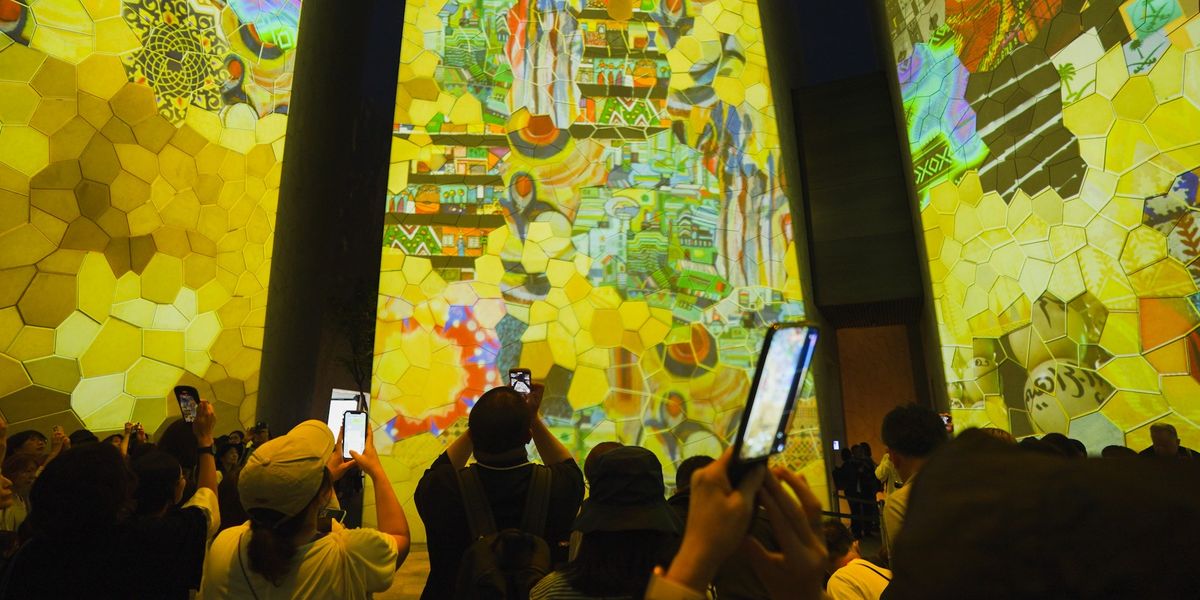
From Global Spectacle to Permanent Immersion with D+DX
Born from renowned production company Done+Dusted, responsible for some of the world's most-watched events, from the London 2012 Olympic ceremonies to League of Legends World Finals, from the Emmys to the Riyadh Season Opening Ceremony, D+DX is a dedicated division created to bring the energy of live broadcast into the immersive experience sector.
However, the industry often struggles to balance the high-quality production standards of temporary events with the operational precision required for permanent attractions. D+DX has specifically positioned itself at this point of convergence.
We speak to the leadership team at D+DX to explore the philosophy that drives them and how they plan to move the immersive genre forward.
For director and executive producer Hamish Hamilton, who has directed the top ten most-watched shows in US history, including the Emmys, the Grammys, the Oscars, and the last 16 Super Bowl Halftime Shows, the launch of D+DX was a response to a fundamental shift in how audiences consume entertainment.
"Live entertainment has changed a lot over the last thirty years, but it feels like the biggest changes have come in the last five," he says.
"We created D+DX as a dedicated division to recognise the huge growth in the market for live immersive experiences. Giving the division its own identity meant we could gather really talented specialists together to make some great shows in this new world of entertainment."
The distinction between a live event and an immersive experience is becoming increasingly blurred, yet the operational requirements vary significantly. While a broadcast event focuses on a single, definitive transmission, LBE demands a heartbeat that can be sustained daily.
One of D+DX’s core goals is to make high-quality cultural experiences accessible at scale. The immersive sector has sometimes been criticised for becoming divided: high-end, exclusive theatrical experiences on one side and superficial "selfie factories" on the other.
Adrian Pettett, CEO of D+DX, is committed to bridging that gap by creating work that is culturally meaningful yet accessible to a wide audience.
Pettett contends that excellent cultural experiences should be accessible and not seem elitist or prohibitively expensive. He references traditional theatre performances at venues such as the Royal Opera House as instances of culture that, although outstanding, may be geographically or financially inaccessible.
"Immersive experiences are not a sudden new concept," he says. "Brands in particular have embraced experiential marketing and communication for many years.
"What has accelerated more in recent times is that other entertainment IPs and brands have embraced immersive solutions and ideas as a way of growing their IP outside of the original genre, thus allowing new audiences to find them and engage with them."
This drive for accessibility shapes the creative tone of their projects. Pettett questions the widespread industry belief that an experience cannot be both "cool and smart" and still appeal to the mass market.
Translating the visual language of a Super Bowl show into a physical walkthrough experience requires a unique creative logic. Ben Cooper, creative director at D+DX, draws direct inspiration from Hamish Hamilton’s broadcast techniques.
"Hamish has always been one of my biggest influences as a creative," says Cooper.
"His particular style, bringing the camera right into the heart of the action so you feel like you’re there with the performer, and then pulling back to show the spectacle of the stadium, is this amazing language he’s developed.
“When we first started talking, that creative philosophy was something we discussed a lot: how we could imbue the immersive experiences we make with that same idea of intimacy in performance alongside scale and spectacle. That was the idea."
This philosophy of "intimacy versus spectacle" is clear in D+DX’s narrative approach. In immersive theatre, the story is not projected onto a screen but uncovered through movement.
Read the full article